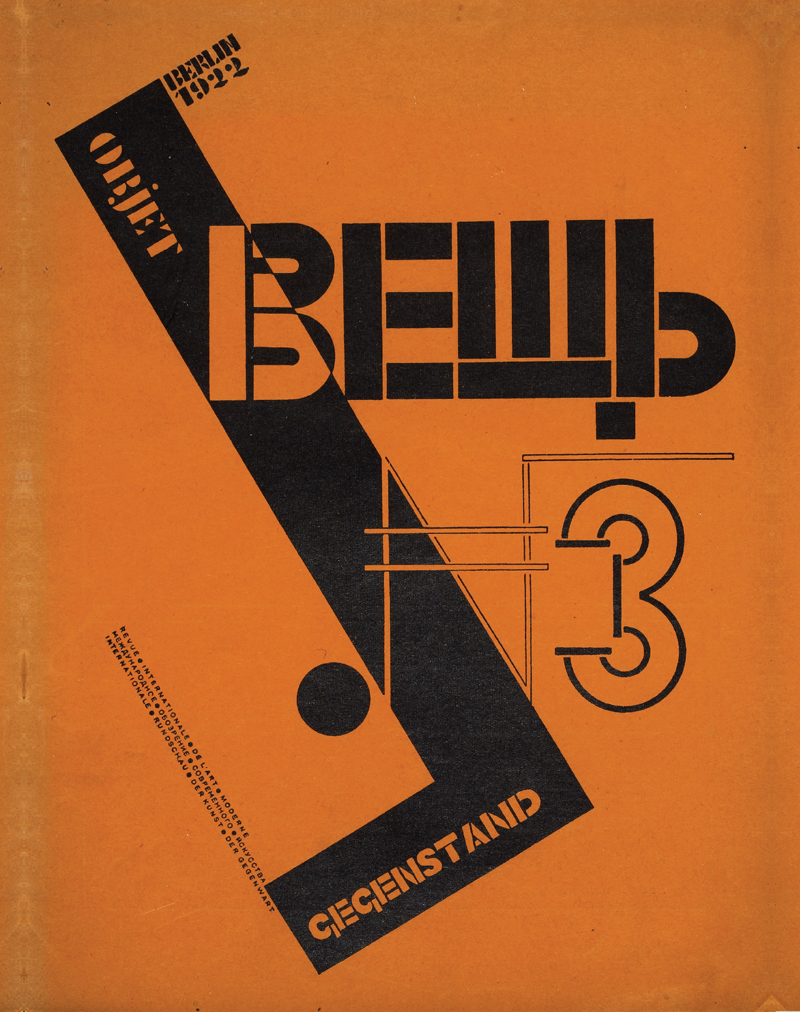
- Why is Lissitzky an influential typographer?
El Lissitzky was a pioneer in typography. The design movements that influenced him culminated in a style unique only to Lissitzky. He was influenced by four main movements: suprematism, constructivism, De Stijl, and Bauhaus.
Influenced by the painter Kasimir Malevich, suprematism created the foundation of Lissitzky’s style through its use of simple shapes, limited color palettes, and complex spacial relationships (Suprematism | Russian Avant-Garde, Geometric Shapes, Abstract Art, 2026). However, Lissitzky separated himself from the movement—which valued art’s intrinsic value—to focus on practical, applied art to help the Bolsheviks in Russia (Suprematism | Russian Avant-Garde, Geometric Shapes, Abstract Art, 2026) Many other artists separated themselves from the movement like Lissitzky did: these artists came to be known as constructivists.
Constructivists aimed to make art for the greater good of society so as to help “construct” society (hence the name) (MoMA, n.d.). The movement’s influence on Lissitzky is apparent due to the constant promotion of his societal, political, and philosophical ideals through his designs—even more so when his career turned to designing propaganda for the Russian communists in his later years.
The De Stijl art movement aimed to promote the artist’s utopian ideas by pushing the viewer to think about what could be through many mediums, such as visual arts, urban planning, music, and poetry (De Stijl (The Style), n.d.). Lissitzky did this through his designs and artwork, as mentioned in an interview with Gavin Wade: “I would like to ask viewers (readers), does this excite you? Does this tease you? Is this what you fantasise about or somewhere close to it?” (Wade, 2019). De Stijl was also known for their strong diagonal elements, something consistently seen throuhgout Lissitzky’s works (De Stijl, n.d.).
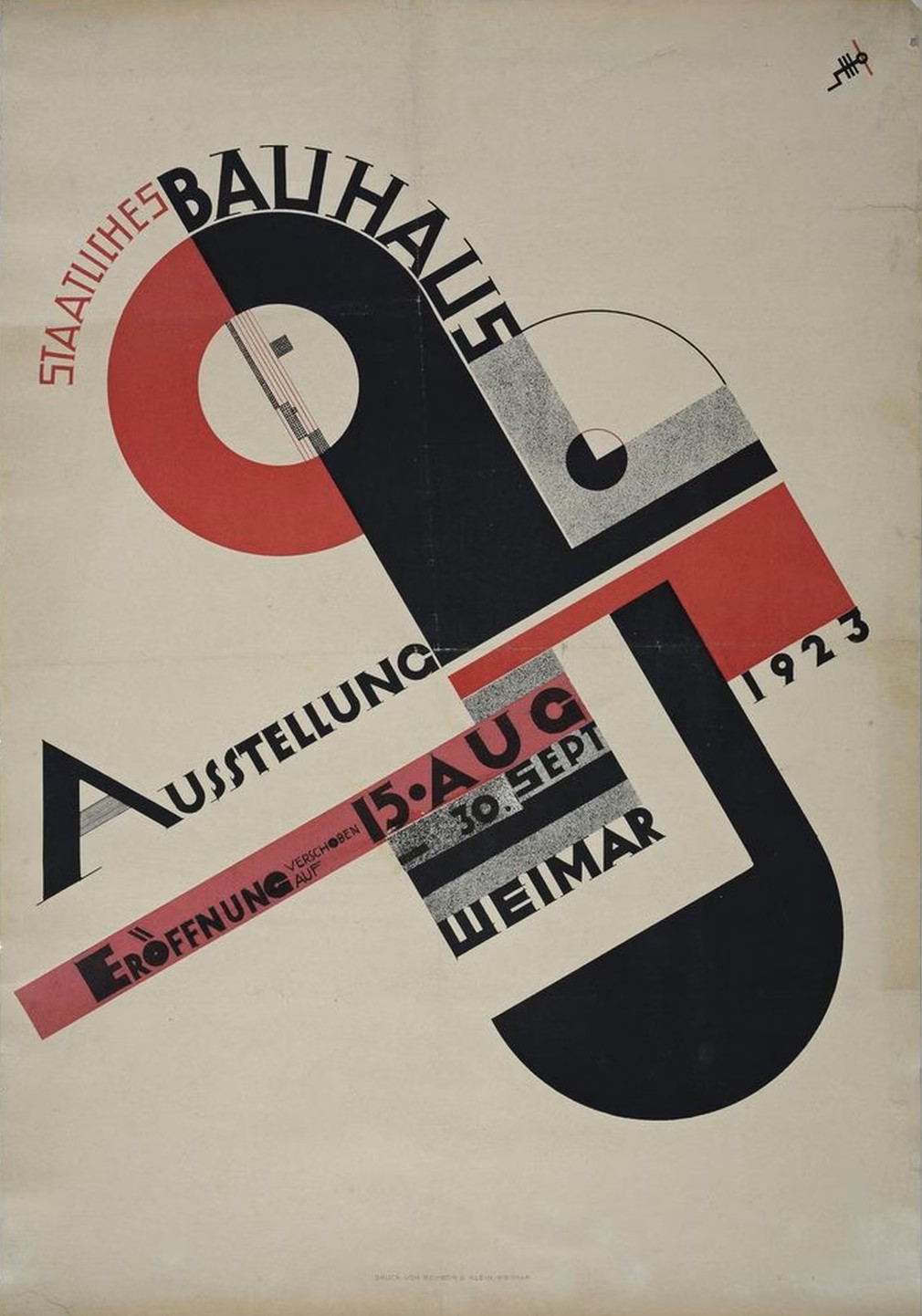
Lissitzky was also influenced by designers at the Bauhaus, who used sans‐serif typefaces, avant‐garde design styles (bold visual elements; unconventional composition techniques rooted in asymmetry, imbalance, and juxtaposition), and limited color palettes (Barnhart & Reinhardt, 2024). They created and followed the idea of “form follows function,” seen through the practical, symbolic (rather than purely decorative) uses of visual elements in Lissitzky’s designs.
All of these influences manifested into Lissitzky through his unique ability to blend and connect the movements’ key design concepts: structured yet dynamic designs that used grid layouts, limited color palettes, tense diagonals, sans‐serif type, and repetition of pure geometric forms. The way Lissitzky organized the space on pages aimed to amplify the messages behind the featured text, as seen in his greatest contribution to typography.